

API for working with digital images for diagnostic purposes
#Healthcare #C# #Asp.NetСore #ABPFramework #MedicalDiagnosis
Project definition
Location
Client
Project type
Industry
Service list
Back-end Development
Service Integration
Team size
M-Size (4–8 engineers)
Budget
$50,000 – $250,000
Task
A private clinic approached us with the task of updating their system for managing histological diagnostic data
Solution
Using .NET in conjunction with the ABP framework, the server-side of the application was developed. The application allowed staff to view historical histological research data and add new results. The administration could restrict access to the resource both for individual employees and for entire departments, providing flexible access control for all clinic staff. Additionally, the administration had the ability to view data "on behalf of a user", which solved the issue of error reporting: admins could log in as a client experiencing an issue and assess the situation from their perspective, allowing them to create a well-informed support request
Impact
The cloud-based diagnostic platform streamlined laboratory workflows, improving documentation processing efficiency by 35% and enabling granular multi-department access control. The innovative "view as user" feature for administrators reduced support ticket resolution times, while centralized data management significantly enhanced both diagnostic reliability and staff productivity across the clinic




💡 This is an AI-CORE project
💡 This is an AI-powered project
💡 Have a similar Industrial or Energy request?
💡 Have a similar Healthcare request?
💡 Have a similar EdTech request?
💡 Have a similar FinTech request?
💡 Have a similar request?
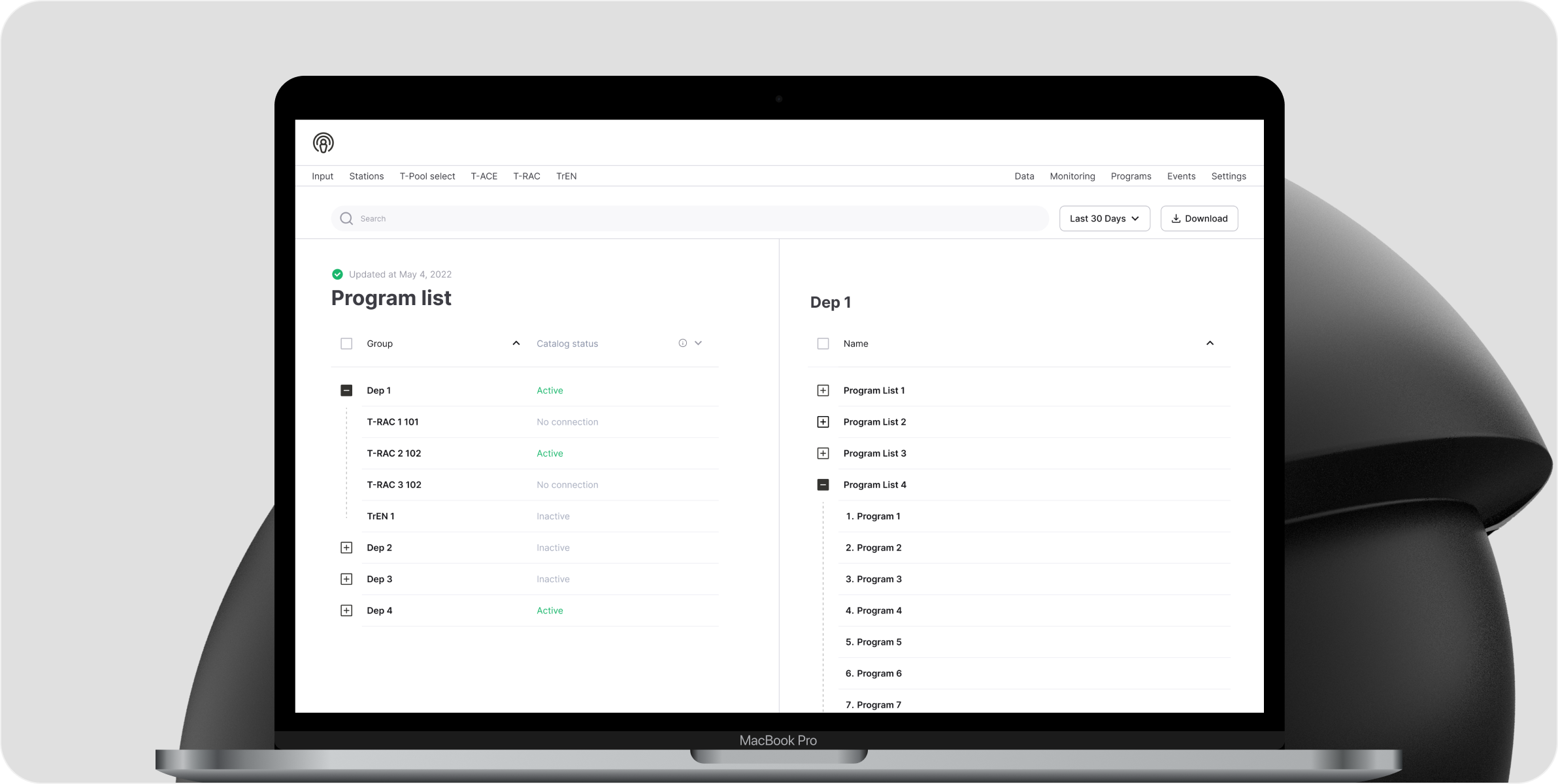
Tools for image processing
We developed an API for the LIMS (Laboratory Information Management System) used for managing, analyzing, extracting, and reporting on digital histopathological images
Notifications
We developed a specialized notification functionality for both medical staff and system administrators
Improving user experience
We added new functionality that significantly improved the user experience with histopathological images

Development Process
We built the solution on .NET 7 and the ABP Framework, following a modular monolith architecture hosted in Azure. The system included case management, test ordering, results delivery, and integrated financial and document management with PDF and CSV support.Multi-tenant functionality allowed several clinics to work independently in the same environment, while flexible access control improved security and compliance. Notifications, email integration, and improved UX for handling medical images further streamlined operations. With PostgreSQL, Redis, and Azure Blob Storage managing data at scale, the platform provided both reliability and future-ready extensibility
Technologies
API for working with digital images for diagnostic purposes
API service for medical diagnosis based on histopathological images

Book a call with our Head of Sales


